The Moral-IT Deck

They are intended to be used in varied flexible ways to help people consider ethical questions in relation to technology, particularly relevant to ones using personal data and potentially design technology accordingly.

Inspired by legislative changes, such as the new General Data Protection Regulation, we recognise the need to build legal compliance into technologies by design and default. High profile scandals of data misuse have increased calls for technologies to be developed in more ethically sound ways too.

They build on work done by Lachlan about cards for privacy by design and were expanded to cover wider ethical, privacy, security and legal issues to provide a tool for ‘ethics by design’ of technology.

Their development and initial use are described in: D. Urquhart, Lachlan, and Peter J. Craigon. 2021. “The Moral-IT Deck: A Tool for Ethics by Design.” Journal of Responsible Innovation 8 (1): 94–126. doi:10.1080/23299460.2021.1880112.

We feel that practical tools for bringing wider values into IT design are lacking. These cards seek to address this gap, by supporting engagement with legal and ethical concepts through a process of translation into a more accessible form.

Building on the concept of Ideation Cards as tools to help structure and inspire creativity in design settings the Moral- IT cards are provide a flexible tool to be used in varied ways to provide prompts and questions to help embed ethical considerations into the design of technology through ‘ethics by design’ They are not intended to be comprehensive but provide a set of appropriate prompts and questions to promote engagement around significant issues in the ethics of technology design. (to help produce more responsible technology)

They are based on a standard set of 52 playing cards (and with markings to be used such) and split into 4 main categories (or suits) and a narrative set:

Ethics – 15 cards (13 cards and 2 blanks)

Security – 15 cards (13 cards and 2 blanks)

Law – 15 cards (13 cards and 2 blanks)

Privacy – 15 cards (13 cards and 2 blanks)

Narrative – 12 cards to help ask questions to structure a session and encourage independent use.
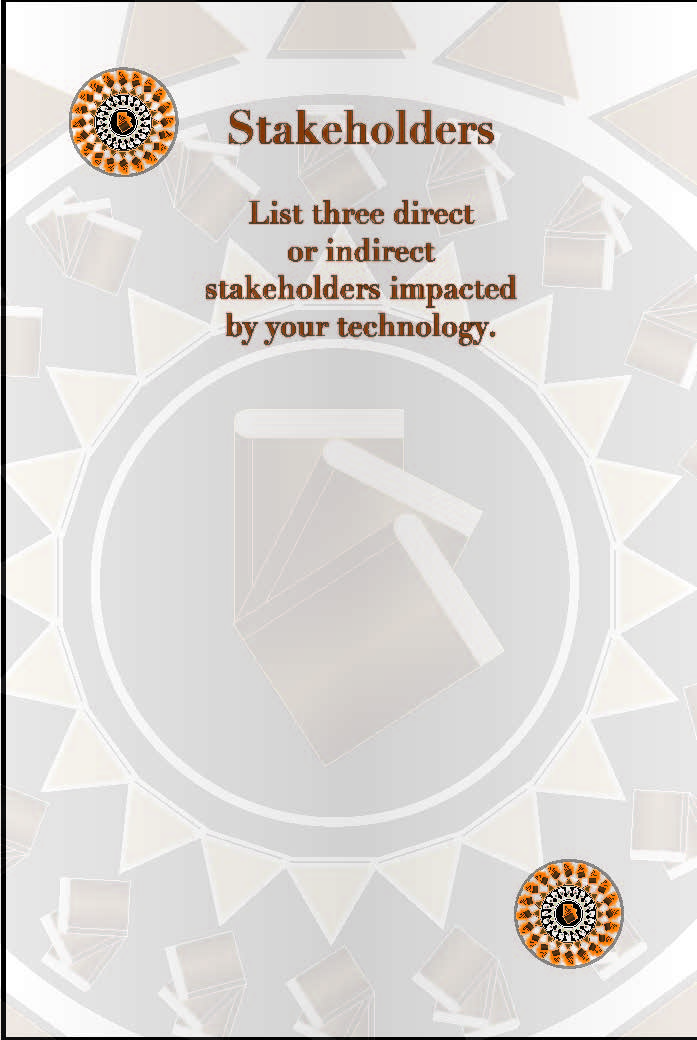
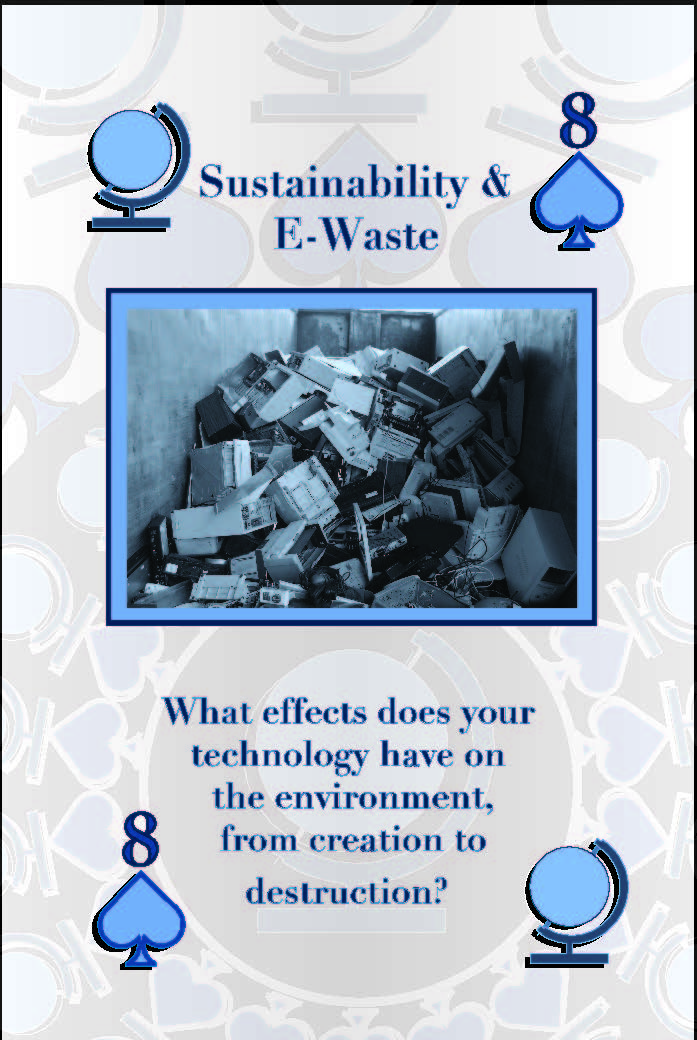
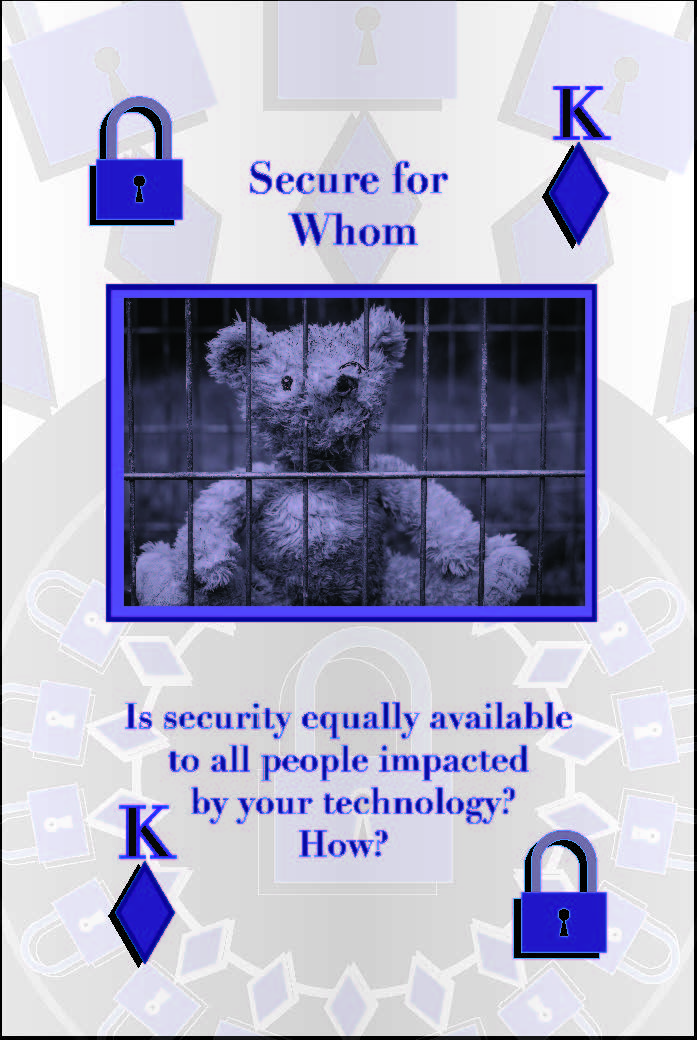
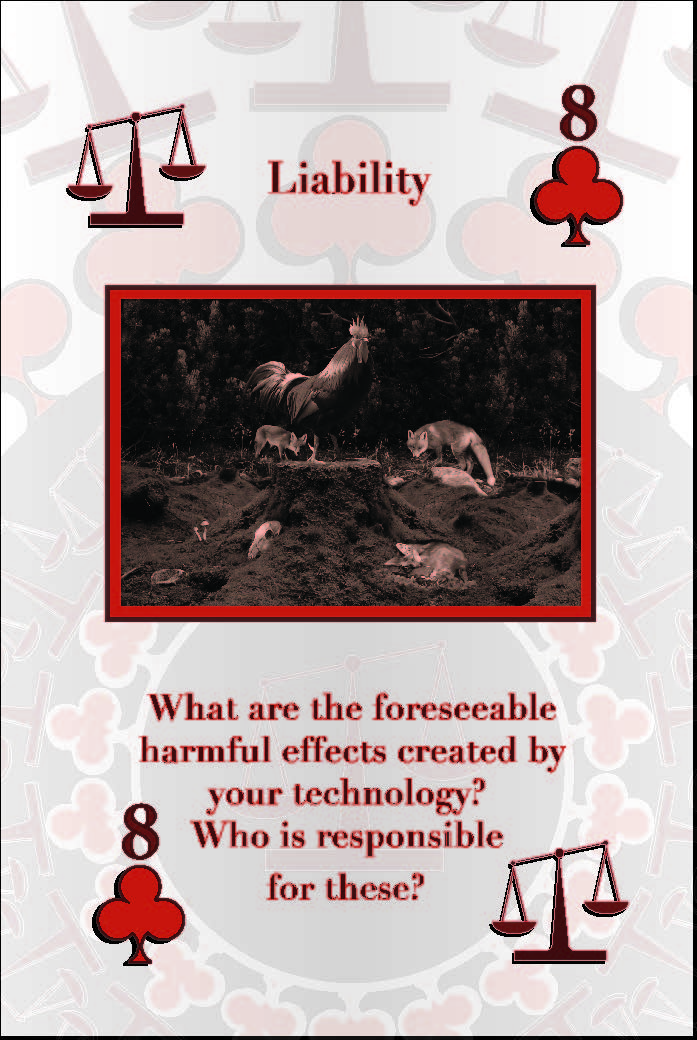
The colour of the card and icons show which set the card belongs to which is also identified on the back.

The title identifies the card and the issue that it represents

The image illustrates the concept and potentially provides an alternative perspective and promote discussion about the concept shown on the card

Underneath the image is an open question referring to ‘your technology’ to promote engagement and encourage reflection and answering in relation to a technology under consideration to promote engagement. On the corners are markings which enable you to use them as playing cards – but bear in mind that the backs are different colours so might affect any game you choose to play.
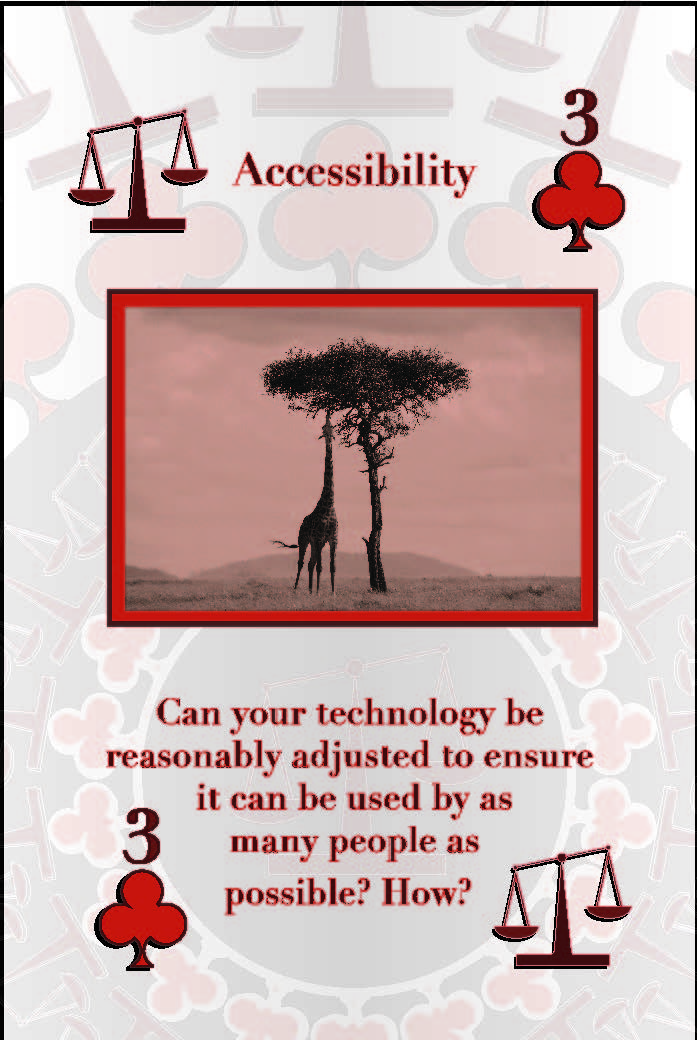
Some examples include:

  • Process board assessment – as described in the paper this involves choosing a technology and using the cards to identify risks, mitigations and challenges. This has been developed to consider both benefits and positives as well as harms and risks in subsequent work to encourage reflections on both positives and negatives of a technology.

  • Individually reflecting on the questions

  • Integrating the cards into the design of a technology for ‘ethics by design’ As the paper says MORE

  • Retrospectively using them to reflect on a particular piece of technology. Come up with your own

See also the website.

Examples include:

  • Training for researchers and PhD students,
  • Reflecting on current research projects, and
  • Planning research proposals.

See the links below.

We have found the online whiteboard Miro a useful tool to enable card exercises to be conducted online. A board with the cards and example resources laid out can be viewed at the link to the right/below and a copy of this board can be downloaded for you to adapt and use for your own purposes can be downloaded from the buttons to the right/below

This allows you to browse through the cards on a web browser or a phone. It has been optimised for a phone.

Physical sets of cards may be available for purchase or you can arrange to print them yourself from the PDFs.

Moral-IT Cards by Dr Lachlan Urquhart and Dr Peter Craigon at Horizon Digital Economy Research, The University of Nottingham (2018) are licensed under a Creative Commons Creative Commons Attribution-NonCommercial-ShareAlike 4.0 International license.

Please cite: D. Urquhart, Lachlan, and Peter J. Craigon. 2021. “The Moral-IT Deck: A Tool for Ethics by Design.” Journal of Responsible Innovation 8 (1): 94–126. doi:10.1080/23299460.2021.1880112.

Further Information can be found on Lachlan’s website.